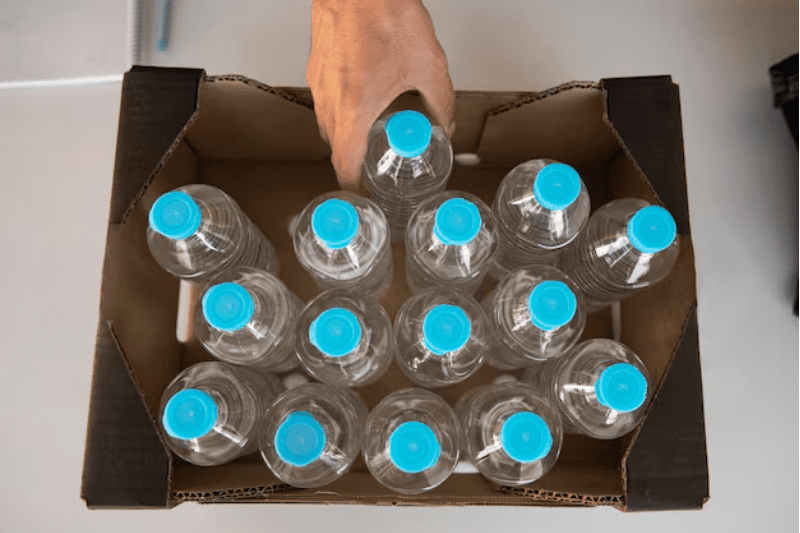
PET bottles are popular in the packaging of water, beverages, edible oil and agro liquids. Although the end product is a bottle, the quality of the product is greatly dependent on something that most consumers are not aware of. PET Preform requirements have a very significant role in determining the strength, durability and reliability of the resulting bottle. The knowledge of such specifications assists manufacturers in achieving a consistent bottle performance according to various applications.
What Is a PET Preform?
A PET preform is a little test tube, example of plastic which is subsequently heated and blown into a bottle. It has the neck finish of the bottle already, and the body is blown-moulded. Any change in quality of the preform will directly affect the thickness of the bottle, strength and look.
Effect of PET Preform on Strength
Weight is one of the most significant preform specifications of PET. The heavier preforms tend to create bottles that have thicker walls and this enhances strength and deformation resistance. Lightweight preforms in their turn are used to decrease the costs of materials, however, they demand a more accurate processing to ensure the durability of the bottles. Any imbalanced matching of the weight to a bottle size and purpose will lead to weak spots or unevenness, of the wall thickness.
The Thickness Distribution of Walls Counts
It is desirable that the preform has uniform wall thickness. When there is not even distribution of the material in the preform, the bottle will not stretch uniformly during the blowing. This may result in thin spots which are more likely to crack, leak or collapse under pressure. Even more important in the case of machines that require stacking or long-distance transportation, proper wall distribution becomes a major issue.
Role of Intrinsic Viscosity
The intrinsic viscosity (IV) is used to determine the molecular strength of PET resin. An increased IV normally increases the impact resistance and load-bearing capacity whereas a low IV results in improved clarity and processing. The appropriate IV level will be taken to provide a balance between the bottle strength and the visual quality particularly the clear packaging in food and agro products.
Finish Accuracy of the Neck
PET preforms have a neck finish that dictates the effectiveness of the bottle in regards to sealing using caps or closures. Poor dimensions may cause leakage or poor sealing affecting the safety of products. Also, when used with automated filling lines, compatible specifications of the neck are a contributing factor to minimizing production downtime.
Consistency in Processing and End Quality of Bottles
Despite proper specifications, improper heating or stretching during the blow moulding may be applied on the finished bottle. There is, however, a broader processing range in high quality orthodox PET that will have fixed specifications that means that the production batches will have the same strength and form of the bottles.
Why is knowledge of preform specifications important?
Manufacturers cannot afford not to know the specifications of PET Preform simply because it is a technical consideration but it is also a quality control requirement. Well-chosen preforms lower the material wastage, enhance shelf life, and make certain bottles work well in the real-life conditions which include variations in temperatures, stacked pressure, and transportation stress.
Conclusion
The knowledge of material specifications and the impact it has on the real world is critical in the sectors concerned with packaging and supply chain. Triveni Group operates in the agro products business, and the quality of packaging is significant in ensuring the safety of its products, storage, and reliability of distribution.