Packaging is so important in safeguarding products and particularly in such industries as food, beverage, and agro supplies. PET preform is one of the most significant and neglected elements of plastic wrapping. The efficiency of the packaging, packet manufacturing speed, and the cost of operation is dependent on the quality of PET preforms. This knowledge can assist businesses to make smarter decisions regarding packaging in order to prevent incurring unnecessary losses.
Discovering PET Preform Quality
PET preforms are miniature molded products, which are blown into bottles or containers. They are subject to factors like purity of the raw material, consistency in wall thickness, weight accuracy and the right conditions of molding. The slightest changes in these respects may cause an inconvenience in the process of blowing the bottles, resulting in wastage, or time-wasting, or spoilage.
Effect on Packaging Efficiency
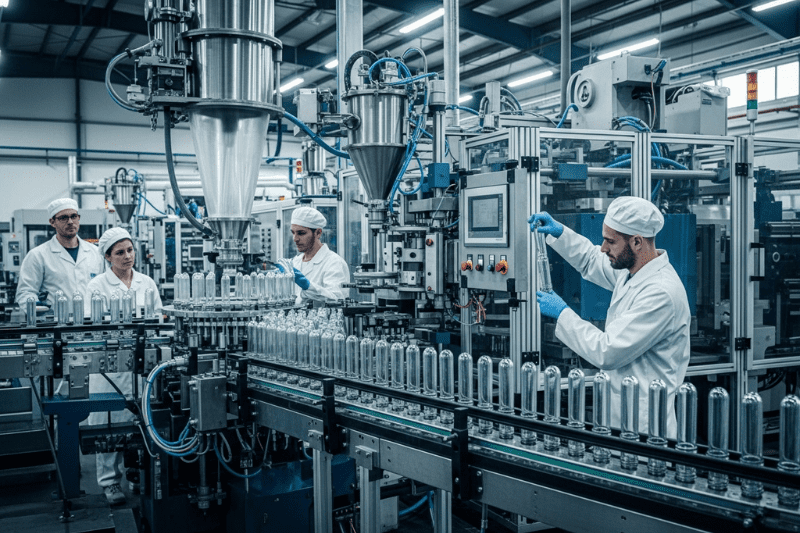
Good quality PET preforms enable machines to operate efficiently and in a continuous manner. Uniform preforms evenly during the blowing phase hence cut down on cycle time and minimized machine stoppages. This enhances efficiency in production and a constant output with minimal changes in production.
Poor quality PET preforms on the other hand may lead to defects that include irregular bottle sides, poor bottoms or the wrong neck finishes. Such problems cause failure to get bottles in, machine downtimes and more labor. Such inefficiencies gradually decelerate the operations and drag down the productivity.
Implications of low Quality of PET Preform on Cost
Cheap PET preforms might seem on the surface to be cheaper, however they tend to raise expenses in other hidden areas. Increased rejection rates result in wastage of materials, whereas frequent machine failures raise the cost of maintenance. There is also increase in energy consumption due to machines having to reheat or reprocess preforms that have gone bad.
Research studies conducted in the packaging industry indicate that the yearly cost of production may rise by 10-15 percent because of waste of materials caused by ineffective quality of preforms. This will translate into a huge loss of money in the long run in the large-scale packaging operations.
Consistency and Precision Role
One of the factors that are crucial in PET preform manufacturing is consistency. The correct weight distribution and even wall thickness allow balancing the bottle strength with the optimal material. Such a balance minimizes the consumption of resin without affecting the performance which brings about direct savings on raw materials.
Accuracy in preform PET increases filling. The bottles that are produced using homogenous preforms preserve their shape throughout filling, stacking and transportation, minimizing spillages and loss of products.
Long Term Operational Advantages
Trustworthy PET preforms can help in the supply chains as well as the predictable production planning. There will be fewer interruptions and improved delivery schedules and less operational strain. In the long run, companies will enjoy reduced repairing expenses, constant production rates, and better management of expenses.
Conclusion
The quality of preform PET is directly and measurably related to the efficiency of packaging and the costs or price. Reduction of waste and energy consumption as well as enhancement of machine performance and stability are some of the advantages of high-quality preforms that contribute to operational stability in the long-run. In the case of agro and packaging-dependent industries where paying attention to the quality of the PET preforms is a technical option, it is also a strategic business decision. This insight is congruent with operational strategy that Triveni Group adopts based on efficiency, material reliability and sustainable packaging strategy throughout the supply operations.