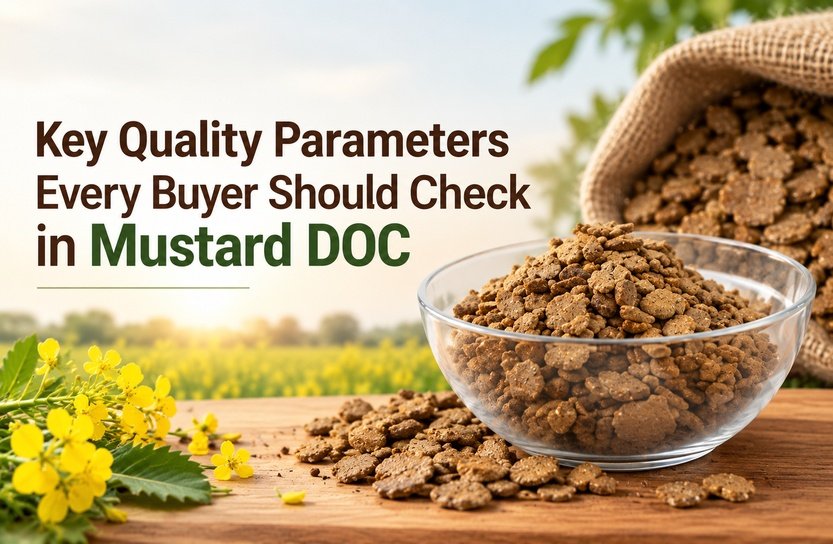
Mustard De-Oiled Cake (Mustard DOC) is one of the most widely used protein-rich ingredients in animal feed. It is commonly used for cattle, poultry, dairy animals, and other livestock because it offers a balanced nutritional profile that supports healthy growth and productivity. Besides its use as livestock feed, Mustard DOC is also valued as an organic fertilizer due to its nutrient-rich composition. However, not every batch of Mustard DOC offers the same quality. Factors such as raw material quality, oil extraction process, storage conditions, and manufacturing standards directly influence its nutritional value and performance.
For buyers, selecting the right Mustard DOC goes beyond comparing prices. Evaluating essential quality parameters helps ensure better feed efficiency, improved animal health, and long-term value. This guide explains the most important factors every buyer should assess before making a purchase.
Why Quality Matters in Mustard DOC
High-quality Mustard DOC provides better nutritional benefits, supports consistent livestock performance, and reduces the risk of contamination. Poor-quality material may contain excessive moisture, impurities, or imbalanced nutrient levels, affecting feed quality and storage life.
Before purchasing Mustard DOC, buyers should always verify:
- Nutritional composition
- Processing quality
- Moisture level
- Purity
- Laboratory test reports
- Supplier credibility
1. Crude Protein Content
Protein is the most important nutritional parameter in Mustard DOC. It plays a vital role in muscle development, milk production, weight gain, and overall livestock health.
A good-quality Mustard DOC generally contains 35–40% crude protein, depending on the mustard seed quality and extraction process. Buyers should always request a laboratory analysis report to verify the protein percentage before purchasing.
Why It Matters
Higher protein content means:
- Better feed efficiency
- Improved animal growth
- Higher milk production
- Enhanced livestock performance
2. Moisture Content
Moisture is another critical quality parameter. Excess moisture creates favourable conditions for mould growth, bacterial contamination, and product spoilage during storage and transportation.
The ideal moisture content should generally remain below 10%.
Benefits of Low Moisture
Lower moisture levels help:
- Extend shelf life
- Prevent fungal growth
- Improve storage stability
- Reduce transportation risks
3. Oil Residue
The amount of residual oil in Mustard DOC depends on the extraction process used during manufacturing.
A controlled oil content improves the product’s energy value, but excessive oil may reduce storage stability and affect product consistency. Buyers should ensure the oil residue matches their intended application and feeding requirements.
4. Fibre and Ash Content
Crude fibre affects digestibility, while ash represents the mineral content present in the product.
Excessive fibre can reduce nutrient absorption, whereas unusually high ash levels may indicate impurities or contamination during production.
Ideal Balance
A good-quality Mustard DOC should have:
Quality Parameter | Importance |
Balanced Fibre | Better digestibility |
Controlled Ash | Higher purity |
Uniform Texture | Consistent feed quality |
Maintaining the right fibre-to-ash ratio helps improve overall feed efficiency.
5. Glucosinolate Levels
Glucosinolates are naturally occurring compounds found in mustard seeds. Although they are present naturally, high concentrations may affect feed intake and animal performance.
Reliable manufacturers monitor glucosinolate levels throughout production to maintain product quality and nutritional balance.
Choosing Mustard DOC with controlled glucosinolate levels contributes to improved feed acceptance and better livestock productivity.
6. Appearance, Texture, and Odour
A simple visual inspection can reveal a great deal about product quality.
Good-quality Mustard DOC should have:
- Uniform brown colour
- Fresh natural smell
- Consistent texture
- No mould
- No insects
- No dust or foreign particles
Products showing unusual odour, discoloration, or contamination should be avoided.
7. Purity and Packaging
Packaging often reflects the manufacturer’s quality standards.
Properly packed Mustard DOC remains protected from moisture, contamination, and environmental exposure during storage and transportation.
Look for suppliers that provide:
- Clean packaging
- Proper labelling
- Batch identification
- Safe storage practices
These factors indicate better quality control throughout the supply chain.
8. Laboratory Quality Reports
One of the most reliable ways to evaluate Mustard DOC quality is through laboratory testing.
A quality report generally includes:
- Protein content
- Moisture percentage
- Oil residue
- Fibre content
- Ash percentage
- Other nutritional parameters
Independent laboratory reports provide buyers with confidence regarding product consistency and help reduce the risk of purchasing inferior material.
Quick Quality Checklist Before Buying Mustard DOC
Parameter | What to Check |
Protein | Around 35–40% |
Moisture | Below 10% |
Oil Residue | Balanced and consistent |
Fibre | Suitable digestibility |
Ash | Low impurities |
Glucosinolates | Controlled levels |
Appearance | Fresh, clean, uniform |
Lab Reports | Available and verified |
How to Choose the Right Supplier
Apart from product quality, selecting the right supplier is equally important.
A reliable supplier should offer:
- Consistent product quality
- Transparent laboratory reports
- Proper packaging
- Timely delivery
- Strong quality control processes
- Good customer support
Working with an experienced manufacturer helps ensure long-term consistency and dependable supply.
Conclusion
Buying Mustard DOC should always involve evaluating quality rather than focusing solely on price. Parameters such as protein content, moisture level, oil residue, fibre, ash, glucosinolate levels, purity, packaging, and laboratory reports provide valuable insights into product performance and nutritional value. Conducting a proper quality assessment helps buyers achieve better livestock performance, longer storage life, and consistent feed quality.
At Triveni, we believe that informed purchasing decisions begin with reliable quality evaluation. By focusing on product testing, transparency, and consistent manufacturing standards, we help customers choose Mustard DOC that meets their nutritional and commercial requirements with confidence.
Frequently Asked Questions
1. Why is protein content important in Mustard DOC?
Protein is the primary nutrient in Mustard DOC. Higher protein levels improve animal growth, milk production, muscle development, and overall livestock performance, making it one of the most important quality parameters buyers should evaluate.
2. What is the ideal moisture content in Mustard DOC?
The ideal moisture content is generally below 10%. Lower moisture helps prevent fungal growth, reduces spoilage during storage, improves transportation safety, and extends the product’s shelf life.
3. How can buyers identify good-quality Mustard DOC?
Buyers should check protein percentage, moisture level, oil residue, fibre content, ash content, glucosinolate levels, product appearance, packaging quality, purity, and laboratory test reports before purchasing.
4. Why are laboratory test reports necessary?
Laboratory reports verify nutritional composition and quality parameters, ensuring the Mustard DOC meets industry standards. They also reduce the risk of purchasing inconsistent, contaminated, or substandard products.
5. Can Mustard DOC be used as an organic fertilizer?
Yes. In addition to being a protein-rich livestock feed ingredient, Mustard DOC is widely used as an organic fertilizer because it supplies essential nutrients that improve soil fertility and support healthy crop growth.