Cinnamon is one of the most widely used spices in the global food industry, adding warmth, aroma, and flavour to a variety of products. However, many food businesses are unaware that the cinnamon available in the market is mainly classified into two types—Cassia Cinnamon and True Cinnamon (Ceylon Cinnamon). Although they may look similar at first glance, they differ significantly in taste, texture, origin, composition, and commercial applications.
Understanding the difference between Cassia and Cinnamon is important for restaurants, food manufacturers, bakeries, spice retailers, and exporters. Choosing the right variety can improve product quality, maintain flavour consistency, meet customer expectations, and support cost-effective production. This guide explains the key differences between Cassia and Ceylon Cinnamon to help food businesses make informed purchasing decisions.
What is Cassia Cinnamon?
Cassia Cinnamon is the most commonly available variety of cinnamon across international markets. It is primarily grown in China, Indonesia, and Vietnam and is widely used in commercial food production due to its affordability and strong flavour profile.
Cassia has thick, hard bark with a dark reddish-brown colour. It offers a bold, spicy, and slightly sweet taste that remains noticeable even after cooking or baking. Because of its intense flavour, it is commonly used in spice blends, baked products, confectionery, beverages, processed foods, and ready-to-eat meals.
One important characteristic of Cassia Cinnamon is its higher coumarin content. Coumarin is a naturally occurring compound that is generally safe when consumed in moderate amounts, but excessive long-term intake may not be advisable.
What is True Cinnamon (Ceylon Cinnamon)?
True Cinnamon, commonly known as Ceylon Cinnamon, is mainly cultivated in Sri Lanka and is considered a premium variety because of its superior quality and delicate flavour.
Unlike Cassia, Ceylon Cinnamon has thin, soft layers of bark that can easily be broken by hand. Its light brown colour, mild sweetness, and subtle aroma make it a preferred choice for gourmet cooking, premium desserts, herbal products, speciality beverages, and health-focused food products.
Another important advantage of Ceylon Cinnamon is its significantly lower coumarin content, making it suitable for people who consume cinnamon regularly.
Cassia vs Cinnamon: Key Differences
Although both belong to the cinnamon family, they differ in several important aspects.
Feature | Cassia Cinnamon | True (Ceylon) Cinnamon |
Origin | China, Indonesia, Vietnam | Sri Lanka |
Colour | Dark reddish-brown | Light brown |
Bark | Thick and hard | Thin and soft |
Flavour | Strong, spicy | Mild, sweet |
Coumarin Content | Higher | Much lower |
Price | More affordable | Premium pricing |
Common Uses | Commercial food products | Premium foods and wellness products |
Taste and Aroma
Cassia Cinnamon provides a stronger and more intense flavour that works well in baked goods, spice mixes, and processed foods. Ceylon Cinnamon has a softer, sweeter, and more delicate aroma, making it suitable for gourmet recipes where subtle flavour is preferred.
Appearance and Texture
The physical appearance also helps distinguish the two varieties.
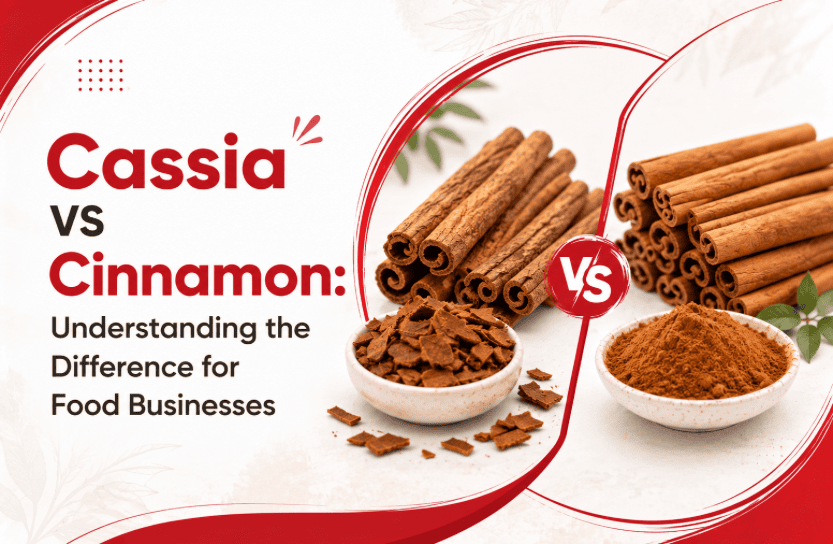
Cassia consists of a single thick layer of bark that is difficult to break by hand. In contrast, Ceylon Cinnamon contains multiple thin layers rolled together, giving it a lighter appearance and more fragile texture.
Nutritional Considerations
One of the most discussed differences is the amount of coumarin.
While both varieties contain beneficial plant compounds, Cassia contains considerably higher levels of coumarin than Ceylon Cinnamon. Businesses supplying health-focused products often prefer Ceylon Cinnamon because of its lower coumarin content.
Which Cinnamon Should Food Businesses Choose?
The ideal choice depends entirely on the product being manufactured and the target customer segment.
Choose Cassia Cinnamon If You Need:
- Strong cinnamon flavour
- Cost-effective production
- Large-scale commercial manufacturing
- Spice blends
- Bakery products
- Processed foods
Choose Ceylon Cinnamon If You Need:
- Premium food products
- Fine dining applications
- Gourmet desserts
- Herbal products
- Wellness products
- Mild natural sweetness
Understanding customer expectations is equally important. Premium consumers often appreciate the subtle taste of Ceylon Cinnamon, while mainstream food products generally rely on the stronger flavour and affordability of Cassia.
Factors to Consider Before Buying Cinnamon
Before selecting a cinnamon supplier, businesses should evaluate several important factors.
- Product quality and consistency
- Country of origin
- Aroma and flavour profile
- Food safety standards
- Packaging quality
- Bulk supply capability
- Pricing
- Reliable supplier network
Working with a trusted supplier ensures consistent quality across every batch, helping businesses maintain product standards and customer satisfaction.
Why Ingredient Selection Matters
The quality of spices directly affects the taste, aroma, shelf life, and consumer perception of finished food products. Even a small variation in spice quality can influence the overall flavour profile.
Whether manufacturing bakery products, beverages, spice mixes, confectionery, or packaged foods, selecting the appropriate cinnamon variety contributes to better consistency, stronger brand reputation, and improved customer experience.
Conclusion
Although Cassia and Ceylon Cinnamon belong to the same spice family, they serve different commercial purposes. Cassia is valued for its bold flavour, affordability, and suitability for large-scale food production, while Ceylon Cinnamon is recognised for its delicate taste, premium quality, and lower coumarin content.
Understanding these differences enables food businesses to choose the most suitable ingredient based on product requirements, customer preferences, and budget. Triveni supports businesses by sharing valuable industry knowledge and insights into spice quality, sourcing practices, and evolving market trends, helping manufacturers and buyers make informed decisions for long-term success.
Frequently Asked Questions
1. Is Cassia the same as cinnamon?
Cassia is one variety of cinnamon, but it differs from True or Ceylon Cinnamon in flavour, appearance, coumarin content, and commercial applications.
2. Which cinnamon is better for commercial food production?
Cassia is generally preferred for commercial food production because it offers a stronger flavour, is widely available, and is more economical. Ceylon Cinnamon is often selected for premium and speciality food products.
3. Why is Ceylon Cinnamon more expensive?
Ceylon Cinnamon requires more labour-intensive harvesting and processing. It is also produced in smaller quantities, contributing to its premium pricing.
4. Can customers identify the difference between Cassia and Ceylon Cinnamon?
Most consumers may not notice the difference in everyday cooking. However, experienced chefs and food enthusiasts can often distinguish Ceylon Cinnamon by its lighter colour, softer texture, and milder flavour.
5. Does the type of cinnamon affect food quality?
Yes. The variety of cinnamon influences flavour, aroma, texture, and overall product quality. Selecting the right type helps businesses maintain consistency and meet customer expectations.
Partner with Triveni for Quality Spice Solutions
Choosing the right spices begins with working with a reliable industry partner. Triveni is committed to helping food manufacturers, retailers, exporters, and businesses understand spice quality, sourcing standards, and changing market requirements. With a strong focus on consistency and authenticity, Triveni supports businesses in selecting the right ingredients to deliver exceptional food products and lasting customer satisfaction.